Happy Easter SVG Design: A Designer's Real-World Review
As a professional designer who spends hours evaluating digital assets for client projects, I rarely get excited about a file without seeing the final stitched result. When I first opened the Happy Easter SVG Design, my initial reaction was one of practical optimism. It isn't just another generic clipart; it feels like a cohesive piece ready to transition from a screen to a needle and thread. For those of us in the Crafts and Graphics sectors, finding a design that balances festive charm with technical viability is crucial. This review breaks down exactly how this file performs when pulled out of the ZIP archive and put to work on real materials.
The First Stitch: Visual Personality and Mood
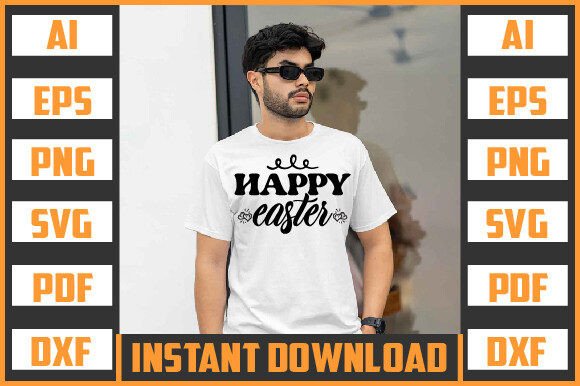
The moment you place the Happy Easter SVG Design into your digitizing software, the layout speaks volumes. It carries a warm, inviting energy that immediately signals "spring" and "celebration." Unlike some designs that feel cluttered or overly complex, this one has a clear visual hierarchy. The shapes are distinct, which is the most important factor for any machine embroidery design. If the lines are too thin or the negative space is insufficient, the stitches will bleed together, ruining the aesthetic. Here, the balance feels right for a variety of applications.
The mood is playful yet polished. It doesn't scream for attention with neon colors (since we are talking about vector files), but it promises a finished product that looks professional. Whether you are aiming for a boutique-style nursery pillow or a fun custom sweatshirt, the design personality fits both high-end handmade goods and casual holiday wear. It creates an immediate sense of joy, which is exactly what customers want to see when they open a package during the Easter season.
Real-World Application: From Digital File to Finished Product
I recently tested this concept by preparing a custom embroidered tote bag for a local craft fair. My goal was to create a reusable shopping bag that would stand out among the standard market offerings. Using the Happy Easter SVG Design, I envisioned a soft pastel background with contrasting thread colors to make the text pop. The versatility of the file allowed me to adjust the scale easily to fit the 10x10 inch hoop size perfectly.
In this scenario, the design excelled. On the tote bag, the clean lines translated well into satin stitches, creating a smooth, glossy finish that caught the light. However, not every project is a flat canvas. I also considered using this design for a baby onesie. For baby embroidery, detail is everything. The design avoids excessive tiny dots or sharp angles that might fray after a few washes. Instead, it relies on solid shapes and readable lettering, making it ideal for items that will be handled frequently by small hands.
Another strong use case is holiday embroidery on kitchen textiles. Imagine a tea towel featuring this design above a pocket, or perhaps a set of aprons for a family gathering. The file works beautifully as a tote bag design or even as a central motif on a decorative pillow cover. Because the files are compressed in a single ZIP, organizing them for multiple product mockups was seamless. As an Etsy seller, having a versatile asset like this means I can list the same design on mugs, stickers, and apparel without needing to hunt for new graphics every week.
Where Caution is Key: Technical Limitations
While the Happy Easter SVG Design is robust, no single file is perfect for every surface. As a designer, I have learned to read the fabric before I start stitching. There are specific scenarios where this design requires careful handling. For instance, if you attempt to stitch this on a highly textured fabric like heavy denim or a thick wool sweater, the stabilizer choice becomes critical. Without proper support, the tension might pull the fabric, distorting the curves of the letters.
We must also consider small hoop sizes. While the design scales well, reducing it too much for a cap or a tiny patch can compromise the integrity of the stitch density. Tiny lettering often disappears under the weight of the thread, turning into a blob rather than crisp text. If you plan to use this for an embroidered patch with a very tight border, you need to ensure the outer details won't clash with the trim.
Furthermore, dark fabrics present a challenge. Unless you are planning a heavy underlay or using a specific color palette, the contrast might be lost. In these cases, the design might look better with a colored backing or a lighter thread choice that stands out against the dark material. Always remember that stitch density plays a huge role here; if the fill areas are too dense, the fabric puckers, and the finished product loses its value.
Strategic Considerations for Commercial Use
For those running a craft business or selling small shop products, the visual appeal of the final item directly impacts customer trust. A poorly executed embroidery job can make a handmade gift look cheap, regardless of how good the original design was. The Happy Easter SVG Design supports a professional look because of its balanced composition, but the execution depends on your setup.
When creating custom apparel like hoodies or jumpers, the design should be placed thoughtfully. A chest logo placement often works best for this type of graphic, whereas a large back print might overwhelm the garment. For personalized gifts, adding a name nearby can elevate the piece, but ensure the font style matches the vibe of the main design. Consistency in brand identity is key for repeat buyers.
Practical Designer Notes for Success
Before you commit to a full production run or a rush order for a client, there are essential steps to take. First, always test the design on scrap fabric. This simple step reveals issues with thread tension, stabilizer adhesion, and fabric stretch that you cannot see on a computer screen. Check the thread colors against your intended background; sometimes a color that looks vibrant on a monitor appears dull once stitched.
Review the stitch density within your digitizing software. If the design feels too crowded, consider simplifying it slightly or adjusting the spacing between elements. Confirm the hoop size required for your specific machine to avoid mid-stitch errors. If you are working with stretchy fabric like jersey knits, use a tear-away or cut-away stabilizer to prevent distortion.
Don't forget to inspect small details. Zoom in on the corners of the letters and the edges of the shapes. Are there any jagged lines? Does the path flow smoothly? Testing the design in black and white mockups can also help you visualize the contrast levels before committing to expensive threads. Finally, verify whether the license allows for commercial embroidery and selling finished items. Many designers overlook this, assuming all SVG files are free for resale.
By treating the Happy Easter SVG Design as a tool rather than just a decoration, you can create high-quality finished products that delight customers. Whether you are making digital embroidery files for others or crafting unique handmade products for yourself, attention to these details ensures your work stands out in a crowded marketplace.