Groovy One Svg: A Designer's Embroidery Review
I have spent years reviewing digital assets for my own handmade shop and client projects, so I know that a pretty preview image does not always translate to a beautiful finished product. When Groovy One Svg, 1st Birthday Svg landed in my inbox, I immediately thought about the specific challenges of stitching a first birthday design. It is a milestone that demands attention, but it also requires a design that can withstand the rigors of machine embroidery without losing its charm.
The file description mentions "Reach Four The Stars Topper" and references space themes like rockets and galaxies, yet the title focuses on a "Groovy One." This discrepancy is common in the graphics world, but as an embroiderer, I had to look past the marketing fluff to see what was actually there. Is this a clean, usable vector for a baby onesie? Can it hold up on a thick cotton tote bag? Let's break down how this design performs in real-world scenarios.
The First Impression: Mood and Visual Personality
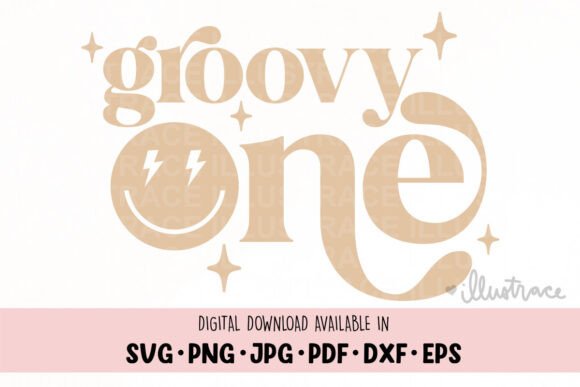
The moment you open the file, the mood is distinct. The "groovy" aesthetic suggests a retro, playful vibe rather than a sterile corporate look. For a designer, this means the lines are likely fluid and the lettering has character. However, when evaluating a design for machine embroidery design, we have to ask if that personality survives the conversion from screen to thread.
In a custom apparel context, such as a sweatshirt or a baby bodysuit, the layout needs to be balanced. If the design is too wide, it will look lost on a child's chest. If it is too tall, it might crowd the neckline. From a visual standpoint, Groovy One Svg, 1st Birthday Svg seems to aim for a bold statement piece. It feels right at home on a nursery wall hanging or a personalized pillow cover where the fabric texture can complement the curves of the letters. The "groovy" style often relies on thick strokes, which is excellent for satin stitch applications because it minimizes the risk of the thread pulling through the fabric.
Real-World Application: The Tote Bag Scenario
Let me take you through a specific project scenario. Imagine I am preparing a boutique collection for a local craft fair. I want to create a set of reusable shopping bags featuring cute, thematic designs for parents. I decide to use Groovy One Svg, 1st Birthday Svg on a heavy canvas tote bag.
Here is where the practical judgment comes in. Canvas is a textured fabric. If the design includes tiny, intricate details—like small stars or thin connecting lines between letters—the needle might skip stitches or the fabric might pucker. In my experience, designs with bold, rounded shapes perform best on textured surfaces. If this SVG features the "astronaut galaxy" elements mentioned in the description, those smaller icons need to be simplified before digitizing them for embroidery. You cannot simply trace a complex vector; you must interpret it for thread.
If I were to place this on a tote bag, I would position it centrally but leave enough breathing room around the edges. The contrast between the thread color and the canvas is crucial. On a dark brown bag, light pastel threads might get lost, whereas on a white bag, black outlines could make the "groovy" font pop. The key here is understanding that the final product value depends heavily on these choices. A well-executed embroidered tote bag becomes a keepsake, while a poorly stitched one looks cheap and discourages repeat business from Etsy sellers or small shop owners.
Navigating Technical Challenges
Not every surface is a canvas tote. Some designers try to use large, detailed files on small areas, and that is where things go wrong. If you plan to use Groovy One Svg, 1st Birthday Svg on a baseball cap or a baby hat, you must be extremely careful. Caps are curved surfaces, and the hoop size is limited. A design that looks perfect flat on your computer screen might distort significantly when stretched over the curve of a hat.
Furthermore, consider the fabric type. Stretchy fabrics like jersey knit require a stabilizer that provides support without adding bulk. If the design has high stitch density, the needle pushing through stretchy material can cause the fabric to gather, creating a bumpy, uneven finish. This is a common pitfall for hobbyists who skip the testing phase. Before committing to a batch of twenty shirts, you must test the design on scrap fabric using the same thread colors and stabilizer you intend to use for the final project.
Another critical factor is the "small detail" trap. If the description implies a "cake topper cut file," the original vector might have very fine lines intended for vinyl cutting. These lines often fail in embroidery because the thread is thicker than a pixel. If the design includes tiny text or delicate decorative accents, they may disappear or merge into solid blobs once stitched. Always inspect the embroidery file closely for these potential issues. If the design is meant for a patch, ensure the border is strong enough to prevent fraying during washing.
Maximizing Visual Appeal and Customer Trust
For small business owners and creative entrepreneurs, the presentation of the finished product is everything. A customer buying a personalized gift expects perfection. If the Groovy One Svg, 1st Birthday Svg results in a messy stitch-out, it damages your brand reputation. However, when executed correctly, the design elevates the perceived value of the item. A professionally embroidered shirt with a unique, groovy font stands out against mass-produced items.
This design works particularly well for holiday gifts or seasonal collections. The retro vibe fits perfectly with fall and winter aesthetics, making it versatile beyond just a birthday party. Whether you are selling a kitchen towel with a space theme or a baby blanket, the design adds a layer of professionalism. It signals to the buyer that you care about quality and detail, which builds trust and encourages engagement with your shop.
Practical Designer Notes for Success
To ensure your project succeeds, follow these essential steps before you start stitching:
- Test on Scrap Fabric: Never assume the design will work on the final material. Run a test on a similar swatch to check for puckering or distortion.
- Check Thread Color Contrast: Ensure the thread colors chosen provide enough contrast against the fabric background. Dark threads on dark fabric often look muddy.
- Review Stitch Density: High-density areas can be difficult to stitch cleanly. Consider simplifying dense fill areas if the fabric is thin.
- Confirm Hoop Size: Make sure the design fits within your standard hoop dimensions, especially if you are working on curved items like caps.
- Inspect Small Details: Zoom in on the vector file. Are there any lines too thin to be stitched effectively? Simplify them if necessary.
- Use Proper Stabilizer: Match the stabilizer to the fabric weight. Heavy stabilizers are needed for stretchy knits, while lighter ones work for wovens.
- Verify Licensing: If you plan to sell the finished products, double-check the license terms associated with the download. Not all digital embroidery files allow commercial use.
Ultimately, Groovy One Svg, 1st Birthday Svg offers a fun, nostalgic option for anyone looking to add a touch of retro flair to their craft business. It is a great candidate for custom apparel, tote bag designs, and baby embroidery projects, provided you respect the technical limitations of machine embroidery. By taking the time to plan your stitch-out and choose the right materials, you can turn this digital asset into a stunning physical product that customers will love.
Whether you are a seasoned pro or a maker just starting out, the key to success lies in preparation. Treat the design not just as a picture, but as a blueprint for construction. With the right approach, this design can become a standout piece in your portfolio of handmade products.