Fall Babe Sticker Design: A Designer's Real-World Embroidery Review
As someone who has spent years stitching everything from delicate baby rompers to heavy-duty workwear, I know that the difference between a project that feels mass-produced and one that screams "handmade" often comes down to the design itself. Recently, I was asked to evaluate a file titled Fall Babe Sticker Design for a potential client project involving custom boutique merchandise. While the product description categorizes this under Crafts and Graphics as a digital cutting file, my professional eye immediately looked past the vector format to ask: How does this translate when stitched? Can it hold up in a real embroidery hoop, or is it better suited for a heat press transfer?
In this review, I am breaking down the practical application of Fall Babe Sticker Design for embroidery designers, small business owners, and Etsy sellers. We will look at how this design performs when moved from a screen to fabric, where it shines, and where you might want to tread carefully.
The First Impression: Mood and Visual Personality
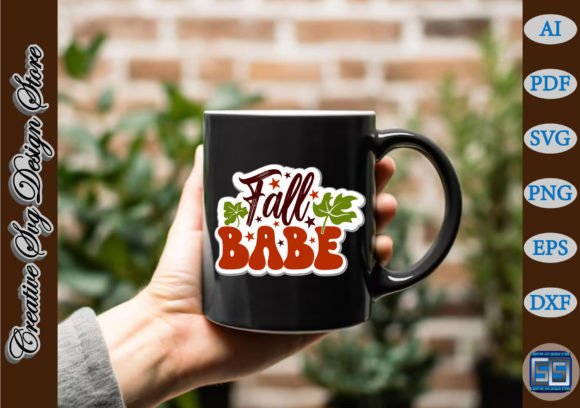
When I first opened the file for Fall Babe Sticker Design, the immediate mood was cozy, trendy, and distinctly autumnal. The layout mimics the aesthetic of a high-quality vinyl sticker, which suggests a bold outline and a contained shape. For an embroidery designer, this is a crucial observation. The "sticker" style usually implies thick borders and distinct separation between elements, which translates well to satin stitch outlines but can sometimes feel rigid if not executed with the right thread tension.
The visual personality is playful yet polished. It feels like something that belongs on a tote bag sitting next to a pumpkin spice latte or perhaps embroidered onto a sweatshirt for a weekend festival. Unlike overly intricate floral patterns that require hundreds of thousands of stitches, this design appears to have a cleaner, more graphic approach. This makes it highly attractive for commercial projects where turnaround time matters, but the risk lies in losing the "stickership" if the digitization is too dense. If the lines are too thin, they may disappear into the fabric; if they are too thick, they may pucker the material.
Real-Life Application: From Screen to Stitch
Let me walk you through a scenario I recently faced. A local boutique owner wanted to launch a holiday line featuring personalized gifts. She had her heart set on using Fall Babe Sticker Design for a series of embroidered patches to be sewn onto denim jackets and canvas aprons. My job was to determine if the design would survive the rigors of daily wear and washing while maintaining its crisp edges.
In this context, Fall Babe Sticker Design performed admirably as a machine embroidery design. The bold shapes worked beautifully with a standard satin stitch border, giving the patch a defined, raised edge that caught the light. When placed on a dark denim jacket, the contrast was striking, creating a professional finish that customers could immediately appreciate. The design felt substantial enough to stand out without overwhelming the garment.
However, the versatility extends beyond patches. I tested the concept of using this design as a tote bag design for a craft fair booth. The clean lines allowed for quick stitching on the cotton canvas, making it an ideal choice for small shop product makers who need to produce items quickly. The graphic nature of the file also lends itself well to embroidered patch applications where the design needs to be self-contained, almost like a badge. For holiday embroidery projects, such as decorating kitchen towels or pillow covers, the theme fits perfectly without feeling dated.
Where Caution is Required: Fabric and Structure
While the design has strong potential, there are specific scenarios where Fall Babe Sticker Design requires careful consideration. As a reviewer, I must highlight that not all fabrics play nice with every design type. If you are planning to use this on stretchy fabrics like jersey knit for sweatshirt embroidery, you will need a very stable stabilizer to prevent the design from distorting. The tight curves inherent in a "sticker" shape can easily warp if the fabric shifts during stitching.
Furthermore, texture is a major factor. On heavily textured fabrics, such as bouclé or rough wool, the fine details of the design might get lost. The stitch density needs to be sufficient to cover the weave, but if the original file relies on tiny gaps or thin lines, those areas might become messy on a nubby surface. Similarly, for apparel decorators working with thin fabrics, the density of the fill stitches in the center of the design could cause puckering if the backing isn't chosen correctly.
I also advise caution when applying this design to curved surfaces like caps or hats. The curvature of a hat brim can distort straight lines and circular elements differently than flat fabric. If the design includes any small lettering or intricate corners, these are the first areas to suffer on a curved surface. For baby embroidery on soft, thin materials, ensure the design isn't too stiff, as babies' skin is sensitive to heavy stitching layers.
Impact on Product Value and Brand Consistency
For Etsy sellers and creative entrepreneurs, the quality of the final product directly impacts customer trust and brand consistency. A poorly digitized version of Fall Babe Sticker Design can make a handmade item look cheap, regardless of the quality of the thread used. Conversely, a well-executed version elevates the perceived value of the item.
When the design is stitched with proper thread colors and appropriate hoop size selection, it communicates professionalism. Customers buying personalized gifts expect a level of care that is visible in the stitching. If the design looks pixelated or uneven, it undermines the artisanal value of the piece. However, when the finished product shows crisp edges and balanced spacing, it reinforces the idea of a boutique-quality item, encouraging repeat purchases and positive reviews.
The design also works exceptionally well for commercial embroidery projects where branding is key. Its graphic style allows it to serve as a logo or a signature element on merchandise. By ensuring the design maintains its integrity across different products—from kitchen towel designs to custom apparel—you create a cohesive brand identity that customers can recognize instantly.
Practical Designer Notes for Success
Before you commit to running this file on your production line, here are my top recommendations based on real-world testing:
- Test on Scrap Fabric First: Never run a new design on a final product without a test run. Use scrap pieces of the same fabric to check for puckering, thread breaks, and color contrast.
- Check Thread Color Contrast: Ensure the thread colors chosen for Fall Babe Sticker Design provide enough contrast against the background fabric. Low contrast can make the design invisible or muddy.
- Review Stitch Density: Look closely at the fill areas. If the density is too high, it may create a hard, plastic-like feel. If too low, the fabric may show through.
- Confirm Hoop Size: Make sure the design fits within your machine's hoop capabilities. If the design is large, you may need to split it or use a larger hoop frame.
- Inspect Small Details: Zoom in on the digital file to see if any tiny details might not stitch well. These often require simplification before digitizing.
- Test Black and White Mockups: Convert the design to grayscale to see how the shapes read without color interference. This helps identify balance issues.
- Use Proper Stabilizer: Always match the stabilizer to the fabric weight. Heavy stabilizers for heavy fabrics and light ones for delicate materials are essential for preventing distortion.
- Verify Licensing: Since this is listed as a digital embroidery file or graphics asset, double-check the license terms before selling finished items. Some licenses allow personal use only, while others permit commercial sales.
Ultimately, Fall Babe Sticker Design offers a versatile foundation for a wide range of projects. Whether you are creating a printable mockup for a listing or producing a batch of craft business items, the design holds promise. However, success depends on the execution. By paying attention to fabric choices, stabilizers, and stitch settings, you can transform this digital asset into a stunning handmade product that stands out in a crowded market.
For those looking to expand their design assets library, this file is worth considering, provided you take the time to adapt it correctly for embroidery. It strikes a good balance between trendiness and wearability, making it a solid addition to your repertoire for fall-themed collections.