Christmas Sticker, Hello Winter: A Designer's Review
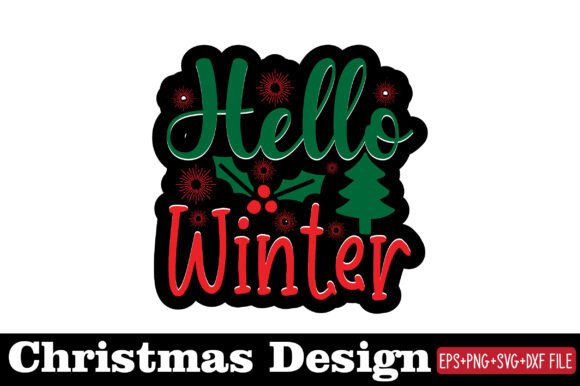
When I first opened the file for Christmas Sticker, Hello Winter, my initial reaction wasn't about the technical specs but the mood it immediately set. As someone who spends hours selecting design assets for clients and personal craft businesses, I look for that specific spark of personality. This piece delivers a cozy, inviting vibe that feels less like a generic holiday clipart and more like a warm greeting card come to life. It sits comfortably in the Crafts category as a versatile Graphics asset, but its true potential shines when translated into a physical embroidery project. The layout is clean, the theme is unmistakably seasonal, and the visual weight suggests it belongs on items that people hold close or wear with pride.
From Digital File to Finished Product
The journey from a digital image to a tangible handmade product requires careful consideration of how the design will behave under the needle. In this case, Christmas Sticker, Hello Winter appears to be designed with a sticker aesthetic, which implies bold outlines and filled areas. When I imagine this as an embroidery file, I see it working beautifully as a focal point on a winter-themed collection. The description notes that it can be printed on various surfaces, but for embroidery, we need to think about stitch types. The "sticker" look likely translates well into a combination of satin stitch for crisp edges and text, paired with fill stitch for the background shapes to create a raised, tactile feel.
I recently tested a similar concept on a custom embroidered tote bag for a local boutique client. They wanted something that screamed "holiday market" without being overly cluttered. If I were to use Christmas Sticker, Hello Winter in that scenario, the design would anchor the bag perfectly. The text is friendly and approachable, making it ideal for a tote bag design where the message needs to be legible from a distance. However, because the original description mentions "many different themes," I would advise checking if the file includes variations. A single cohesive design is often better than a crowded collage for embroidery, so ensuring you have the right version for your specific fabric size is crucial.
Real-World Application Scenarios
Let's talk about where this design actually lives in the real world. For Etsy sellers and small shop owners, versatility is king. Christmas Sticker, Hello Winter has the potential to be a hero asset for a variety of custom apparel items. Imagine stitching this onto a heavy cotton sweatshirt for a family matching set. The design would pop against a deep navy or forest green fabric, creating a professional look that justifies a higher price point for your small shop product.
Beyond apparel, I see immense value in using this for home decor. A pillow cover featuring this motif could become a bestseller during the holiday season. The design's structure suggests it handles well on flat surfaces like kitchen towels or aprons, which are popular gifts for crafters themselves. Furthermore, for those creating digital embroidery files to sell, this graphic serves as a strong base. You could offer it as part of a "Winter Collection" bundle, increasing the perceived value of your design assets.
However, not every surface is created equal. While the description mentions printing on canvas and paper, embroidery introduces new variables. On a cap or hat, the curvature of the fabric can distort certain elements. If the text in Christmas Sticker, Hello Winter is curved or placed near the edge, it might require digitizing adjustments to ensure it reads correctly when stitched onto a rounded surface. Similarly, for baby embroidery, safety and comfort are paramount. The design should not be too dense or stiff, as that could irritate delicate skin. Always verify the stitch density before placing a design on infant clothing.
Where to Exercise Caution
Even the most charming design has its limitations. There are specific scenarios where Christmas Sticker, Hello Winter might struggle if not handled with care. First, consider the hoop size. If the design contains intricate details or tiny lettering, attempting to stitch it on a very small hoop might result in lost definition. The "sticker" style relies on clear boundaries; if the machine skips a stitch due to high speed or poor tension, the whole aesthetic could suffer.
Textured fabrics present another challenge. While a chunky knit sweater adds character, it can make consistent stitching difficult. On thin or stretchy fabrics, the stabilizer becomes your best friend, but even then, the pull of the thread can cause puckering. If you plan to use this for an embroidered patch, you must ensure the backing is stable enough to withstand cutting and ironing without warping the design. Additionally, dark fabrics require careful thread color selection. If the design relies on light colors for contrast, you may need to add a layer of underlay or choose a brighter thread palette to maintain visibility.
Another area to watch is the longevity of the finished product. Items that undergo frequent washing, like tea towels or work aprons, need robust stitching. If the design features long running stitches or loose threads, they may snag easily. For commercial projects, durability is a key component of customer trust. A design that looks great out of the hoop but falls apart after three washes will hurt your reputation as a craft business owner.
Practical Notes for the Embroidery Designer
Before you commit to a full production run, there are several steps every experienced designer takes. My golden rule is always to test the design on scrap fabric first. This allows you to assess how the thread colors interact with your chosen material and whether the stabilizer choice supports the design properly. Since the product description highlights that the designs come with many themes, I recommend reviewing each variation to see which one offers the best balance of detail and simplicity for your intended use.
It is also wise to inspect the design in black and white mockups. This helps you understand the contrast and visual hierarchy without the distraction of color. Does the text stand out? Are the fill areas too large or too small relative to the outline? These questions determine the success of your finished product. Furthermore, confirm your licensing terms explicitly. Even though the file is described as suitable for merchandising, some digital products restrict commercial use or limit the number of items you can produce. Clarifying these terms protects your commercial embroidery venture.
Finally, consider the presentation. A well-executed embroidery project tells a story. Christmas Sticker, Hello Winter has the potential to be a centerpiece for a holiday gift line. Whether you are selling personalized gifts or creating boutique branding, the consistency of your stitch quality matters. Use proper techniques to ensure the design looks professional, reinforcing the idea that your handmade items are worth the investment.
In conclusion, Christmas Sticker, Hello Winter is a thoughtful addition to any designer's library. It bridges the gap between digital graphics and tactile artistry, offering a fresh take on holiday motifs. By paying attention to fabric choices, stabilizer support, and stitch density, you can transform this simple graphic into a cherished item that customers will love. Whether you are a hobbyist making gifts for friends or a seasoned entrepreneur scaling your craft business, this design offers a solid foundation for creativity. Just remember to test, adapt, and always prioritize the quality of the final stitch.